
Understanding National Park Visitor Centers: Maps, Exhibits and Ranger Information
Visitor centers in national parks can turn an unfamiliar landscape into a manageable plan, connecting you with maps, exhibits, and ranger guidance. This overview explains how to use orientation maps, information desks, opening hours, and accessibility details to plan realistic, safe trips that match your time and abilities.
Why Visitor Centers Matter in National Parks
National Park Visitor Centers are often the first structured stop for many visitors, serving as a practical introduction to a park’s landscape, rules, and current conditions. Staff and exhibits there help translate large amounts of information into clear guidance so people can decide how to use their time, understand basic safety considerations, and get oriented to major roads, trails, and viewpoints. Because parks vary widely in size, climate, and visitor facilities, a visitor center can provide a grounded starting point, especially for those unfamiliar with the region, local wildlife, or seasonal risks such as sudden weather changes or trail closures.
These facilities also support thoughtful trip planning by offering maps, printed materials, and ranger conversations that can be adjusted to different interests, time frames, and mobility needs. Rather than guaranteeing a particular experience, staff usually outline options, clarify regulations, and explain where services such as restrooms or accessible routes are located, leaving final choices to each visitor. This role is informational rather than promotional: visitor center trip planning focuses on sharing up‑to‑date facts, limitations, and potential constraints so people can set realistic expectations and plan visits that fit their abilities, available time, and comfort with outdoor conditions.
Core Services You Will Find at a Visitor Center
Many visits to a national park start at the visitor center because it brings essential information together. Ranger information desks are usually the main point of contact, where staff explain current conditions, seasonal changes, and safety alerts that might affect your plans. Instead of fixed itineraries, rangers help you compare options based on your time, abilities, and interests, from short paths near facilities to longer backcountry routes. This is also the place to ask about regulations, basic trail etiquette, and how to limit your impact on wildlife and sensitive areas. Posted opening hours, which often change with the season, determine when you can speak with staff in person, so it is useful to confirm the current schedule on official park sources rather than relying on older printed material.
Trip planning at a visitor center usually combines orientation maps, printed guides, and conversation with rangers so you can make your own choices instead of following one standard route. Staff can highlight which viewpoints, paths, and facilities are more suitable for visitors using wheelchairs, strollers, or other mobility aids, and where steep slopes or rough surfaces may be difficult. They also explain when popular areas tend to be busy, where parking is limited, and how weather, construction, or temporary closures may restrict access. Because conditions and policies change, rangers avoid promising particular wildlife sightings or views and instead help you prepare alternatives, making the visitor center a practical first stop for planning a flexible visit.
| Visitor type | Most useful service | How it helps | Notes |
|---|---|---|---|
| First-time visitor | Ranger Information Desks | Basic orientation and safety brief | Ask about current conditions and simple routes |
| Family with children | Visitor Center Trip Planning | Match short routes to attention spans | Confirm restrooms and family-friendly stops |
| Hiker with limited time | Orientation maps with ranger input | Prioritize a few key trails or viewpoints | Check distance, elevation, and drive time |
| Visitor with mobility needs | Accessibility guidance from staff | Identify smoother paths and facilities | Clarify slopes, surfaces, and parking access |
| Photographer or wildlife watcher | Current conditions discussion | Plan around light, crowds, and closures | Prepare backup locations if access changes |
Ranger information and trip-planning support
Ranger information desks in National Park Visitor Centers are the main place to ask practical questions before you travel further into the park. Staff can describe current trail and road conditions, explain key regulations, and clarify details from orientation maps or exhibits. Visitors often ask which areas are usually less crowded, where restrooms or food services are located, and how accessibility options are described in official materials, while recognizing that staff rely on recent reports and cannot predict every situation.
When you request trip-planning help, rangers usually begin with your available time, interests, and abilities, including any mobility limits, comfort with distance or elevation, and whether you are with children or older adults. Using that information, they may outline possible routes, give approximate travel times, and note points where you should reassess conditions. Their guidance is informational rather than a safety guarantee, so visitors remain responsible for checking updates, carrying suitable gear, and deciding what fits their own skills and health.
Understanding opening hours and seasonal operations
Opening hours at National Park visitor centers often change with the season, daylight, weather, and staffing. A building that is busy and fully open in summer may run shorter hours, reduce services, or close on some days in winter or during shoulder seasons. Wildfires, storms, road work, or maintenance can also alter schedules at short notice, and parks with multiple centers may post different hours at each site. Because of this, visitors are encouraged to check official park websites, recorded phone lines, or on-site notices shortly before arrival instead of relying on older information.
When a visitor center is closed, the park itself may still be accessible, but information and services are limited. Outdoor bulletin boards, basic maps at entrance stations, or seasonal rangers at temporary desks may substitute for indoor help. Trip planning assistance, detailed exhibits, ranger programs, bookstores, indoor restrooms, and drinking water may be unavailable or offered only at specific times. Confirming current operations in advance allows visitors to adjust arrival times, identify alternative stops, and bring extra supplies so they can still move around the area safely when regular facilities are not fully open.
Maps, Exhibits, and Other Orientation Tools
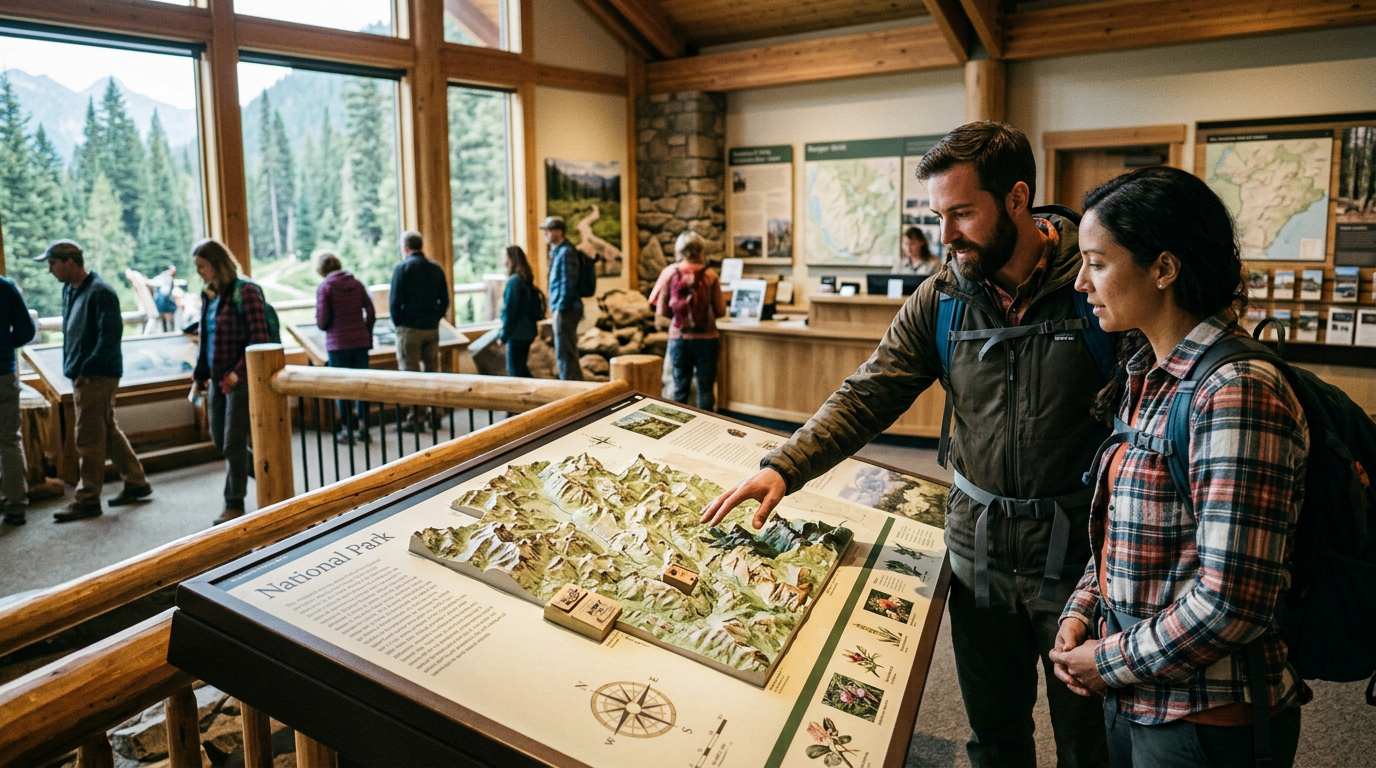
When visitors enter a national park visitor center, they usually find maps and exhibits that explain where they are and what they might encounter. Permanent and temporary displays introduce major themes such as geology, wildlife, and cultural history, using models, photos, and brief text instead of technical reports. These exhibits cannot replace time in the field, but they highlight sensitive habitats, seasonal conditions, and restricted areas so people can set realistic expectations before heading onto trails or scenic roads.
Orientation maps are another core tool, ranging from large wall maps to handouts and simple trail sketches. They usually show roads, trailheads, restrooms, accessible routes, and symbols for services such as campgrounds or picnic areas. Because boundaries, closures, and conditions change, these maps work best as a general guide, not a precise navigation instrument. Visitors are typically advised to check current information rather than rely only on a single printed map or an old screenshot.
Many visitor centers also offer short films, touchscreen displays, and staffed information desks to support basic trip planning. Introductory films and other media give a quick overview of safety topics such as altitude, wildlife viewing rules, and weather risks, although they cannot address every situation. Staff at information counters help match general guidance to a visitor’s schedule, experience, and mobility, but they are not personal guides. Using these tools together helps visitors build flexible plans and remember they are responsible for checking updated advisories and making cautious decisions outdoors.
Using park orientation maps effectively
Orientation maps at a national park visitor center give a broad overview for trip planning rather than precise, real-time detail. They usually highlight main roads, trail networks, viewpoints, restrooms, campgrounds, and sometimes sensitive habitats or seasonal closures. When you study a wall map or brochure, compare it with nearby trail descriptions, elevation profiles, and hazard notices so you understand not just where a route goes, but also how steep, long, or exposed it is and what services you will actually pass.
Because printed and posted maps cannot update instantly, they may not show road work, wildfire impacts, washed-out bridges, or temporary trail restrictions even when the design looks current. Before deciding on a hike or scenic drive, check the date on the map or brochure, read any temporary signs, and confirm details at the ranger information desk, especially in less-traveled areas or during shoulder seasons.
Q&A
-
Why is it useful to start a trip at a National Park Visitor Center?
It brings together maps, current conditions, basic safety guidance, and staff who can help you match your plans to your time, interests, and abilities. -
What kinds of exhibits do visitor centers usually have?
Visitor center exhibits typically cover geology, wildlife, and human history with models, photos, and short explanations, plus notes on sensitive or restricted areas. -
How should I use park orientation maps when planning my day?
Use them to see main roads, trails, and facilities, then compare with trail descriptions and hazard notices so you understand distance, elevation, and services along the way. -
What can I ask at a ranger information desk?
You can ask about current road and trail conditions, regulations, likely crowding, locations of restrooms or food, and where to find accessibility details. -
How do I find visitor center opening hours and accessibility information before I go?
Check the official park website, recorded phone messages, or recent on-site notices, because hours and accessibility details can change with season, weather, and maintenance.