
Why Low-Speed Awareness Matters More Than People Expect
Parking lot safety depends on attention, patience, and clean vehicle positioning. Low-speed movement can still become risky when visibility is poor, pedestrians are unpredictable, and drivers rush simple maneuvers that require more observation than power or speed.
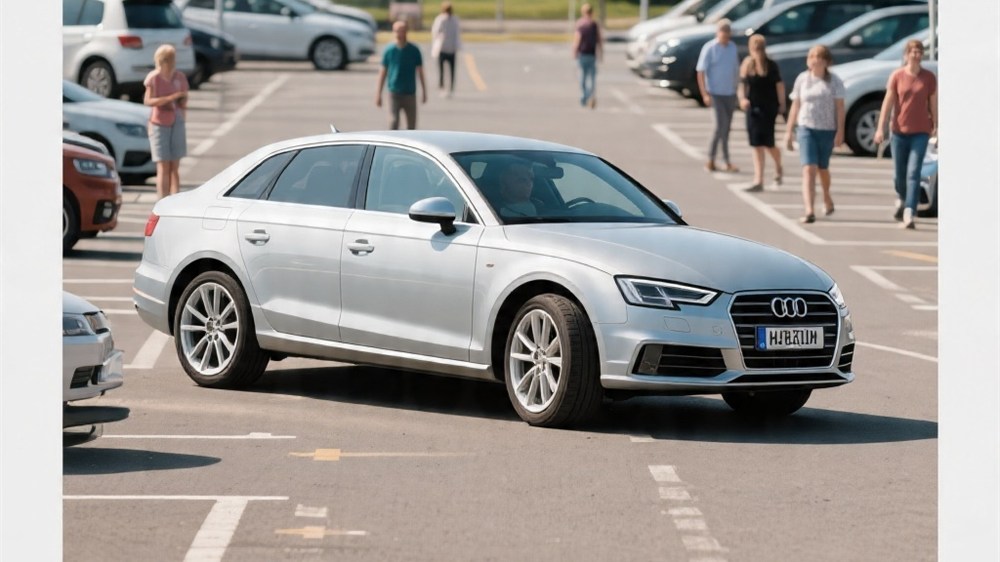
Some of the most avoidable driving mistakes happen far from open roads. Parking areas compress vehicles, people, carts, curbs, and limited sightlines into a space where patience matters more than momentum and careful observation matters more than confidence alone.
Parking areas are busy even when they seem calm
Parking Lot Safety begins with accepting that slow speed does not automatically mean low risk. Cars appear from unexpected rows, pedestrians move unpredictably, and sightlines are often blocked by larger vehicles. Drivers who relax too early because the environment feels informal can miss the very details that matter most.
Pedestrian Attention Skills are essential because people in parking areas do not behave like traffic. They may stop suddenly, walk diagonally, emerge from behind vehicles, or focus on bags and children rather than approaching cars. Drivers therefore need a wider pattern of observation than they might use on a normal street.
Low Speed Control supports this because a car that is moving gently and predictably gives the driver more time to reassess and others more time to react.
Backing up demands more discipline than confidence
Reverse Maneuver Awareness is one of the most important parking habits because the driver's view is naturally more limited when the vehicle is moving backward. Even when mirrors and cameras help, they do not remove the need for deliberate observation and patience.
Blind Spot Checking matters here because parking rows create angles where another car, a pedestrian, or a fixed object can remain hidden until the last moment. A driver who checks carefully before moving and again while moving is far safer than one who assumes the path will remain clear.
| Parking lot moment | Main risk | Helpful habit |
|---|---|---|
| Backing out between larger vehicles | Blocked side visibility | Use reverse maneuver awareness and pause often |
| Turning into a narrow spot | Poor angle and side clearance | Slow down and improve tight space positioning |
| Passing near storefronts | Unpredictable pedestrian movement | Strengthen pedestrian attention skills |
| Changing direction in a crowded row | Rushing a simple maneuver | Rely on mirror use habits and low speed control |
Positioning well prevents last-second corrections
Tight Space Positioning is easier when the driver sets up the car early instead of trying to save a poor angle halfway through the maneuver. Good positioning reduces the need for abrupt steering inputs and makes it easier to judge the space calmly.
Mirror Use Habits support this by helping the driver understand the vehicle's relationship to nearby lines, cars, and curbs. Mirrors are most useful when they are checked in a consistent pattern rather than used only after something already feels too close.
Parking Lot Safety therefore, depends on rhythm. A driver who sees early, positions early, and moves gently usually avoids the awkward corrections that create stress in confined spaces.
Patience is a real safety tool
Low Speed Control is valuable not because slow driving is always good in itself, but because it leaves room for thought. Parking lots reward the driver who is willing to pause, recheck, and yield instead of insisting on an immediate move.
Pedestrian Attention Skills and Blind Spot Checking both become easier when the vehicle is not pressuring the driver to decide too quickly. The best parking lot behavior often looks simple from outside because it is built on restraint, not urgency.
This is especially true near families, shopping carts, and tightly packed rows where one extra second of patience can prevent a rushed mistake.
Safe parking habits make the whole trip end better
Drivers often focus on highway safety and forget that the trip also begins and ends in places where precision matters. Parking Lot Safety gives those everyday moments the attention they deserve.
When Reverse Maneuver Awareness, Mirror Use Habits, Tight Space Positioning, and Low Speed Control become normal behaviors, parking feels less tense and more orderly. That calm control is what makes low-speed driving safer than simple confidence ever could.
QA
Why are parking lots risky even at low speed?
Because they combine poor visibility, unpredictable pedestrian movement, and frequent directional changes in a confined space.
Do cameras replace the need for careful mirror checks?
No. Cameras help, but they do not remove blind areas or replace the need for deliberate observation before and during a maneuver.
What makes backing out especially difficult?
The driver often has limited side visibility, especially when nearby vehicles are large or closely parked.
Why is positioning so important in a tight parking space?
A better entry angle reduces the need for abrupt corrections and makes the car easier to place accurately.
What is the most useful mindset in a crowded parking area?
Patience. A driver who is willing to pause and reassess is usually safer than one who tries to complete the maneuver quickly.